
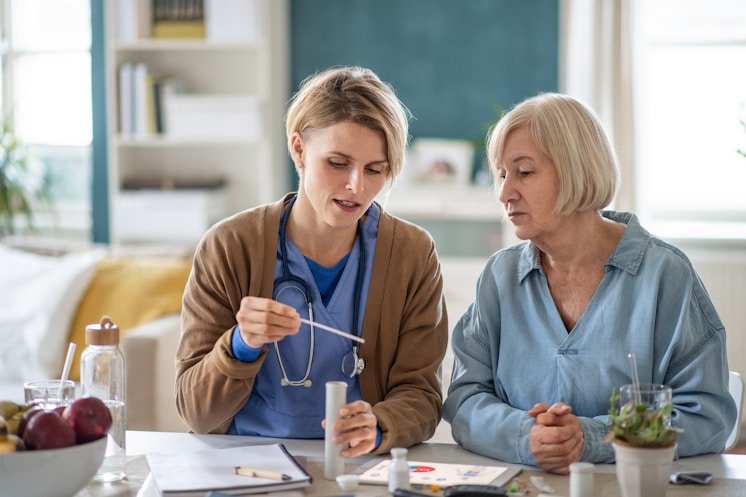
Learning German is an essential step for care workers who want to work in Germany, Austria, or Switzerland. In the healthcare sector, communication is just as important as medical knowledge. Care workers deal with elderly patients, disabled people, and individuals who need daily support. To provide proper care, it is necessary to understand what patients feel, what they need, and how to respond in a polite and professional way. That is why German language skills play a major role in building a successful career in caregiving.
In Germany, care workers are expected to communicate with patients, doctors, nurses, and family members. Even simple tasks like giving medicine, helping with bathing, changing clothes, or assisting in walking require clear conversation. Patients may feel scared or uncomfortable, so using the right German words can help them feel safe and respected. Good communication also prevents mistakes, especially in medical situations where misunderstanding can lead to serious problems.
Most employers in Germany require at least a B1 level of German for care workers. For professional nursing jobs, B2 is often necessary. At A2 level, you can manage basic daily conversation, but it may not be enough for hospital or elderly care work. Higher levels like B2 help you understand instructions, write reports, and communicate confidently during emergencies.
The best way for care workers to learn German is by focusing on practical healthcare communication. Instead of only learning grammar, they should practice real-life sentences used in care settings. Common phrases like “Haben Sie Schmerzen?” (Do you have pain?), “Möchten Sie Wasser trinken?” (Do you want to drink water?), and “Ich helfe Ihnen beim Aufstehen” (I will help you stand up) are used daily in caregiving jobs.
Learning German vocabulary related to body parts, symptoms, medicine, and daily care activities is very important. Care workers should also learn polite forms of speaking because respect is a key part of German culture. Listening practice is equally important because German speakers talk fast, and care workers must understand quickly.
Daily practice can make German learning easier. Watching German healthcare videos, using language apps, reading simple medical dialogues, and speaking with others can improve fluency. Joining German language courses specially designed for nursing and caregiving can also help faster.
In conclusion, German language learning is a must for care workers who want to work abroad. It increases job opportunities, builds confidence, and ensures better patient care. With regular practice and a focus on care-related German, anyone can learn the language and succeed in the healthcare field in Germany.